
How to Keep Weeds Out of Flower Beds (Without Constantly Fighting Them)
It All Begins Here
One of the most common questions we get from homeowners is:
"How do I keep weeds out of my flower beds?"
The truth is, there isn't a magic product or one-time solution that will permanently eliminate weeds forever. In fact, after years of maintaining landscapes, we've found that most weed problems are actually maintenance problems.
What's even more interesting is that many times we're not fighting weeds at all—we're fighting grass.
The Problem Most Homeowners Don't Notice
When people think of weeds in flower beds, they usually picture dandelions or other broadleaf weeds popping up throughout the bed.
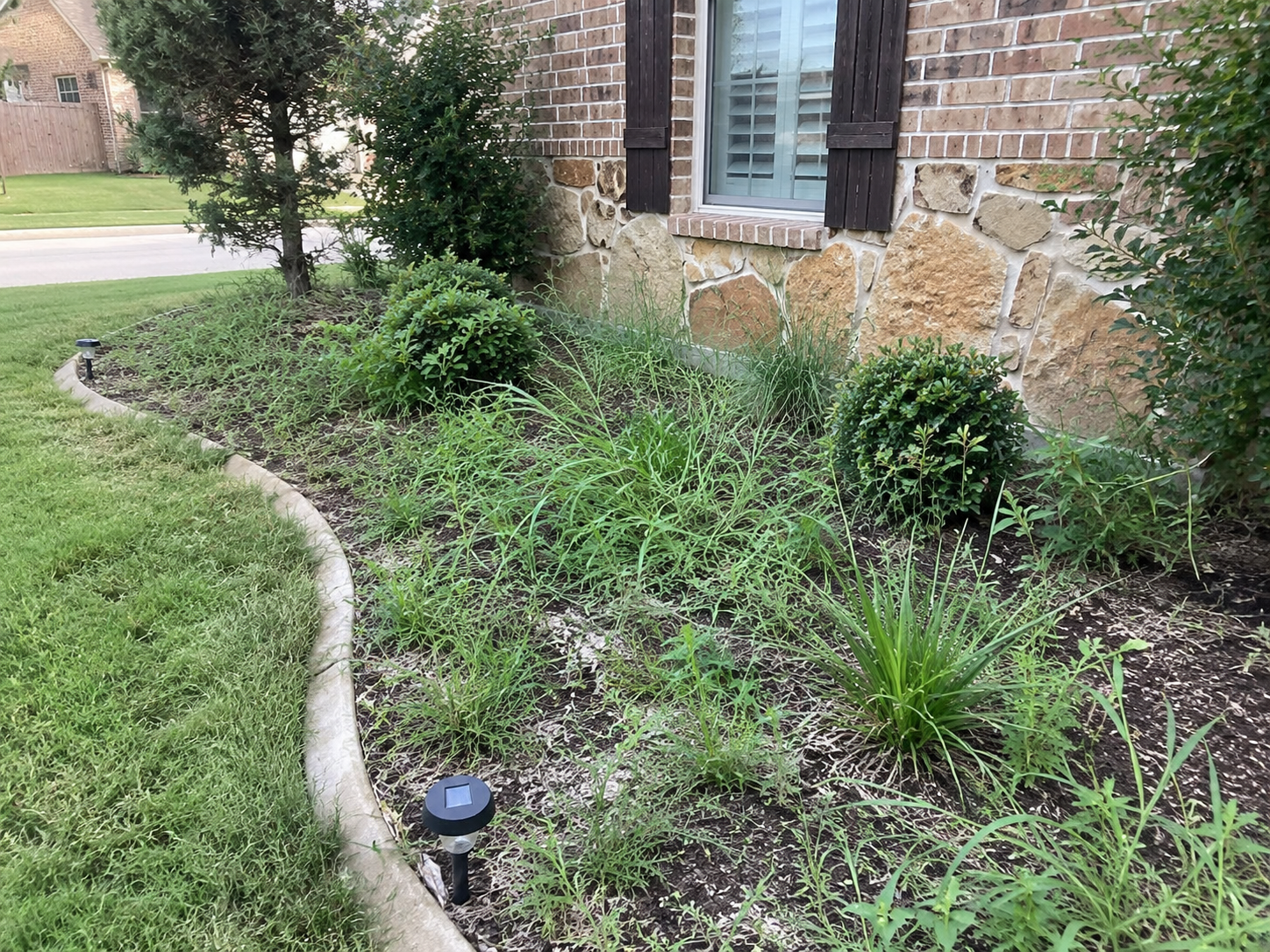
What we actually see more often is grass from the lawn creeping into the flower beds.
Many flower beds have a natural edge with no border separating the lawn from the bed. Over time, grass runners slowly make their way into the bed and begin spreading. Homeowners pull them, they come back, and the cycle repeats itself.
This is one of the biggest reasons flower beds become difficult to maintain.
Why Borders Can Help
One solution is installing a physical border between the lawn and the bed. Click here for more information on Borders.
A stone border, metal edging, or another permanent border can help slow down grass runners from moving into the bed. It won't eliminate maintenance completely, but it can significantly reduce the amount of grass intrusion over time.
We worked with one homeowner who had a natural edge around their flower beds. They were constantly pulling weeds and grass throughout the year and wanted a way to reduce the frequency of maintenance.
Instead of installing weed fabric, we recommended a stone border combined with routine maintenance. We also performed periodic organic weed treatments using a vinegar-based solution.
The result wasn't a completely weed-free flower bed—but it dramatically reduced how often the homeowner had to deal with weeds and grass, which was exactly what they wanted.
Why We Like Mulch So Much
If there is one thing we recommend for almost every flower bed, it's mulch. Click here for more information on Mulch.
Most homeowners think mulch is only for appearance, but it does much more than that.
Mulch helps:
Suppress weed growth
Retain moisture during hot Texas summers
Protect soil from erosion
Improve the appearance of the landscape
Think about a healthy lawn for a moment.
A thick, dense lawn naturally crowds out weeds because there isn't much room for weeds to establish themselves.
Flower beds don't have plants covering every square inch of soil. That leaves open areas where weed seeds can land and germinate.
Mulch helps fill that gap.
By covering exposed soil, mulch makes it more difficult for weeds to establish themselves while also helping maintain soil moisture for surrounding plants.
Will weeds still appear occasionally? Absolutely.
But they usually appear much slower than they would in bare soil.
What Weeds Are Really Telling You
One thing many people don't realize is that weeds often tell us something about the condition of the soil.
In our experience, heavy weed pressure is frequently associated with compacted soil.
Weeds thrive in harsh environments. They grow in cracks in sidewalks, along driveways, and in compacted areas where other plants struggle.
When we see a section of a flower bed with excessive weed growth, it often makes us wonder:
"Is this area compacted?"
Compaction can be caused by:
Foot traffic
Equipment traffic
Rainfall over time
Poor soil structure
Chemical overuse
Healthy soil contains bacteria, fungi, and organic matter that help create aggregation within the soil. As soil becomes healthier, it generally becomes looser and better structured.
The looser the soil, the less favorable it often becomes for many problem weeds.
That's one reason we're big believers in focusing on soil health rather than simply focusing on killing weeds.
The Biggest Mistake Homeowners Make
Without question, the biggest mistake we see is waiting too long.
Many homeowners let flower beds go for months before addressing weeds. By that point, what could have been a quick 5-minute touch-up turns into a large cleanup project.
The easiest and most cost-effective approach is staying ahead of the problem.
A little maintenance every week or every other week is almost always easier than trying to reclaim a bed that has been neglected for months.
This applies whether you're:
Pulling weeds by hand
Using an organic weed treatment
Having a landscaping company maintain the beds
Consistency wins every time.
Our Opinion on Weed Fabric
This may be unpopular, but we're not huge fans of weed fabric.
That's not because weed fabric never works.
It's because most people only think about the installation—not the replacement.
Eventually, weed fabric tears, shifts, and breaks down. When that happens, someone has to remove portions of it and replace it.
If the landscape has matured over several years, replacement becomes much more difficult and expensive than it was during the original installation.
Many homeowners end up spending significant money on weed fabric upfront only to discover years later that they're still pulling weeds and now have the added cost of replacing damaged fabric.
For most of our customers, we've found that maintaining mulch and performing routine weed control produces results they're perfectly happy with without the long-term complications.
What About Organic Weed Control?
For customers who prefer to avoid traditional herbicides, we often use vinegar-based organic weed treatments.
These can be effective when used properly, but they aren't perfect.
One thing we always keep in mind is that overuse can create issues around desirable plants because vinegar is acidic.
Like any tool, it needs to be used appropriately and as part of a larger maintenance strategy—not as a cure-all.
The Lowest-Maintenance Approach We've Found
If your goal is the lowest-maintenance flower bed possible, here's what we'd recommend:
Maintain a clean edge between the lawn and bed.
Install a border if your budget allows.
Keep mulch fresh and maintained.
Address weeds regularly before they become a major problem.
Focus on soil health and reducing compaction.
Consider periodic organic weed treatments if needed.
The goal isn't to create a flower bed that never needs maintenance.
The goal is to create a flower bed that requires very little maintenance.
Those are two very different things.
Final Thoughts
If there's one thing we want homeowners to remember, it's this:
Most flower bed problems aren't caused by a lack of products—they're caused by a lack of maintenance.
In our experience, keeping soil healthy, maintaining mulch, reducing compaction, and preventing grass from creeping into beds will solve the majority of weed problems homeowners face.
There is no magic solution.
But there is a simple one:
Stay ahead of the problem, and you'll spend far less time—and money—fighting weeds in the future.
If your needing landscaping services to help take care of this issue, click here to get in-touch with our team so we can help you. Landscape services.